Sustainability
The hidden yearly cost of disposable cups in your office pantry
A 200-person office can easily get through 2 lakh disposable cups a year. The price of the cups is the smallest part of the bill.
MUSTHAV team · · 4 min read
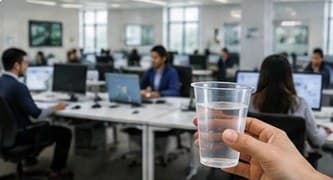
Disposable cups look like a rounding error in an office budget. Each one costs under a rupee. But every employee uses several a day, every working day.
Count your cups
Here’s a simple model for a 200-person office. Change the numbers to match yours.
- 200 employees.
- 4 cups per person per working day: two for water and two for tea or coffee.
- 250 working days a year.
That comes to 2,00,000 cups a year. At ₹0.50 to ₹1.50 a cup, the office spends roughly ₹1 lakh to ₹3 lakh a year just buying them.
The costs that aren’t on the invoice
- Housekeeping time to restock the pantry and clear away used cups.
- Waste handling: cups fill pantry bins and are rarely recyclable.
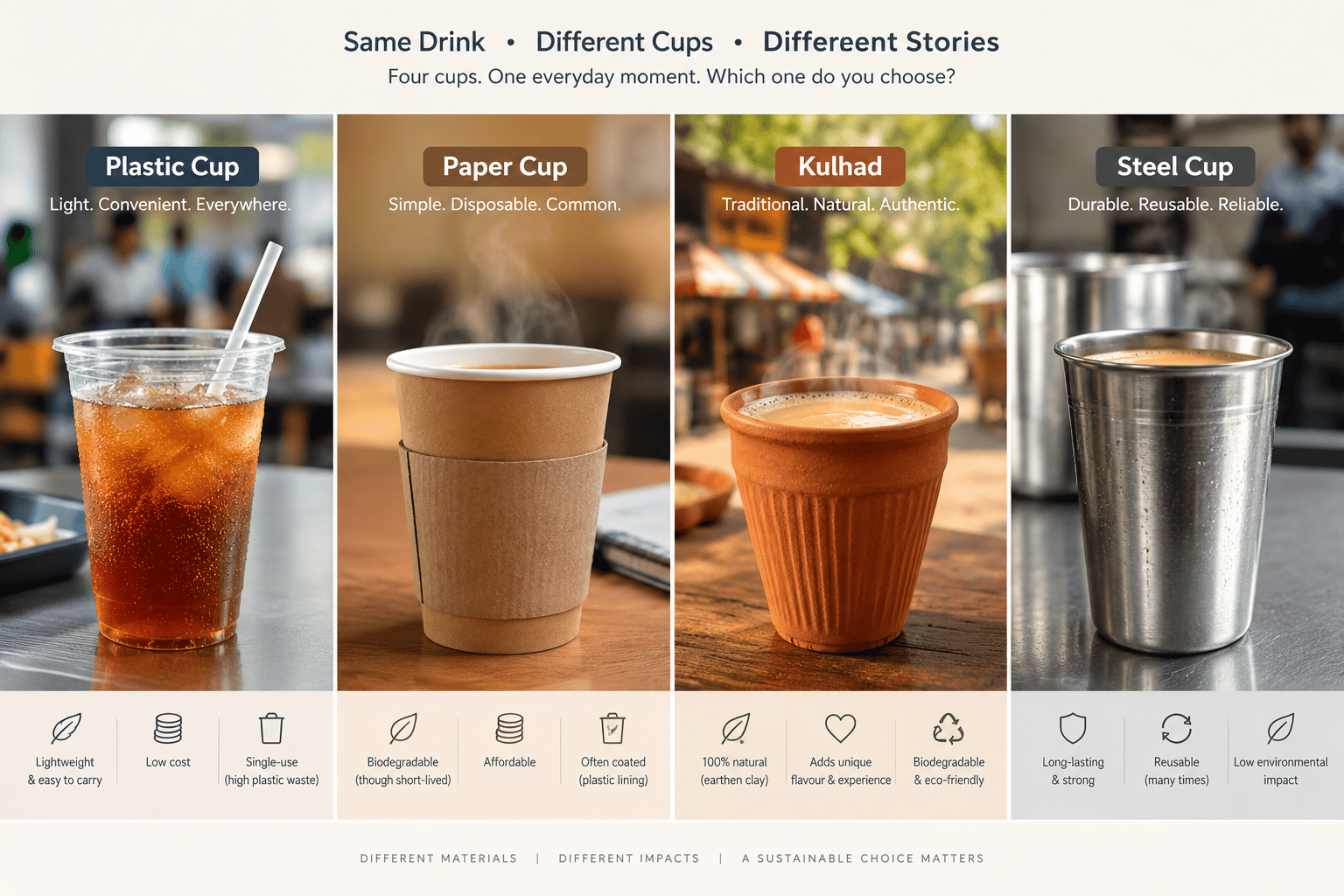
- Health: most offices have moved to paper cups, which are lined with plastic.
- Reporting: every cup shows up in the waste figures in your sustainability and BRSR disclosures.
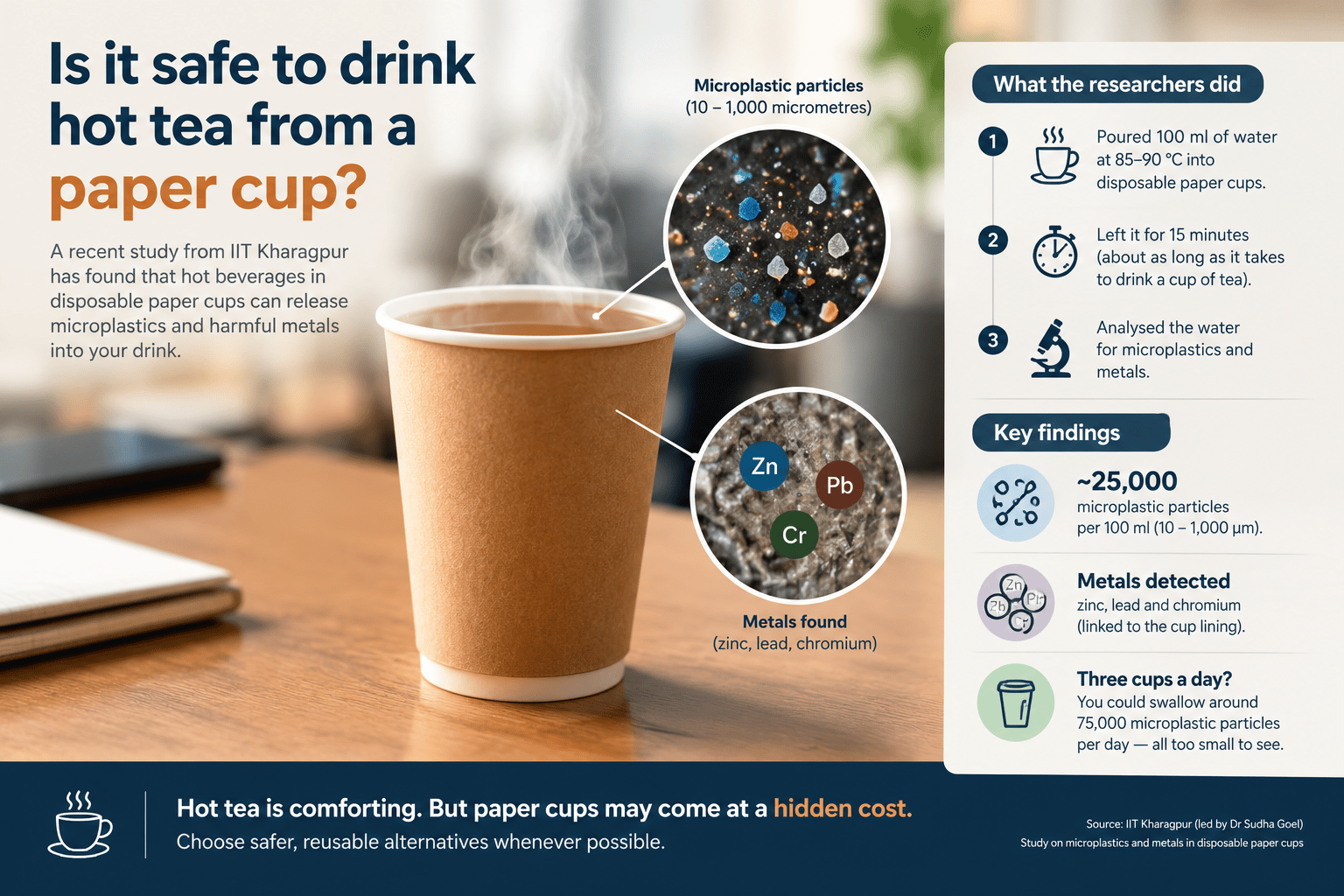
The health point is easy to miss. In an IIT Kharagpur study, 100 ml of hot water left in a paper cup for 15 minutes held around 25,000 microplastic particles.[2]
The rules apply to offices too
Plastic cups and glasses have been banned in India since 1 July 2022. An office that still stocks them is out of step with the law, and switching to paper cups only goes part of the way.[1]
Where to start
- Ask housekeeping how many cups were bought last quarter. That’s your baseline.
- Stock the pantry and meeting rooms with steel or glass tumblers.
- Make washing quick and visibly hygienic, so people trust a shared glass.
- Track the drop and report it in your sustainability disclosures.
GILAS was designed for pantries like this. It serves water contact-free in a steel glass and cleans each glass on the spot, so there are no cups to buy and no bins of them to empty.
Sources
- [1]Government of India, Press Information Bureau (2022), ban on identified single-use plastic items from 1 July 2022 under the Plastic Waste Management (Amendment) Rules, 2021. View source (opens in a new tab)
- [2]Ranjan, V. P., Joseph, A. and Goel, S. (2021), Microplastics and other harmful substances released from disposable paper cups into hot water. Journal of Hazardous Materials, 404, 124118 (IIT Kharagpur). View source (opens in a new tab)
See GILAS working in your setting.
Book a 15-minute demo for your school, hospital, event or office.
Request Demo