Hygiene
One glass, many mouths: why hygiene belongs in the plastic debate
Swapping plastic tumblers for a shared, unwashed glass trades a waste problem for a health problem. In schools and hospitals, that trade matters most.
MUSTHAV team · · 4 min read
Most conversations about plastic tumblers are about waste. And the waste is real: only 9% of the world’s plastic waste is ultimately recycled, while 22% is dumped, burned in the open or leaked into the environment.[1]
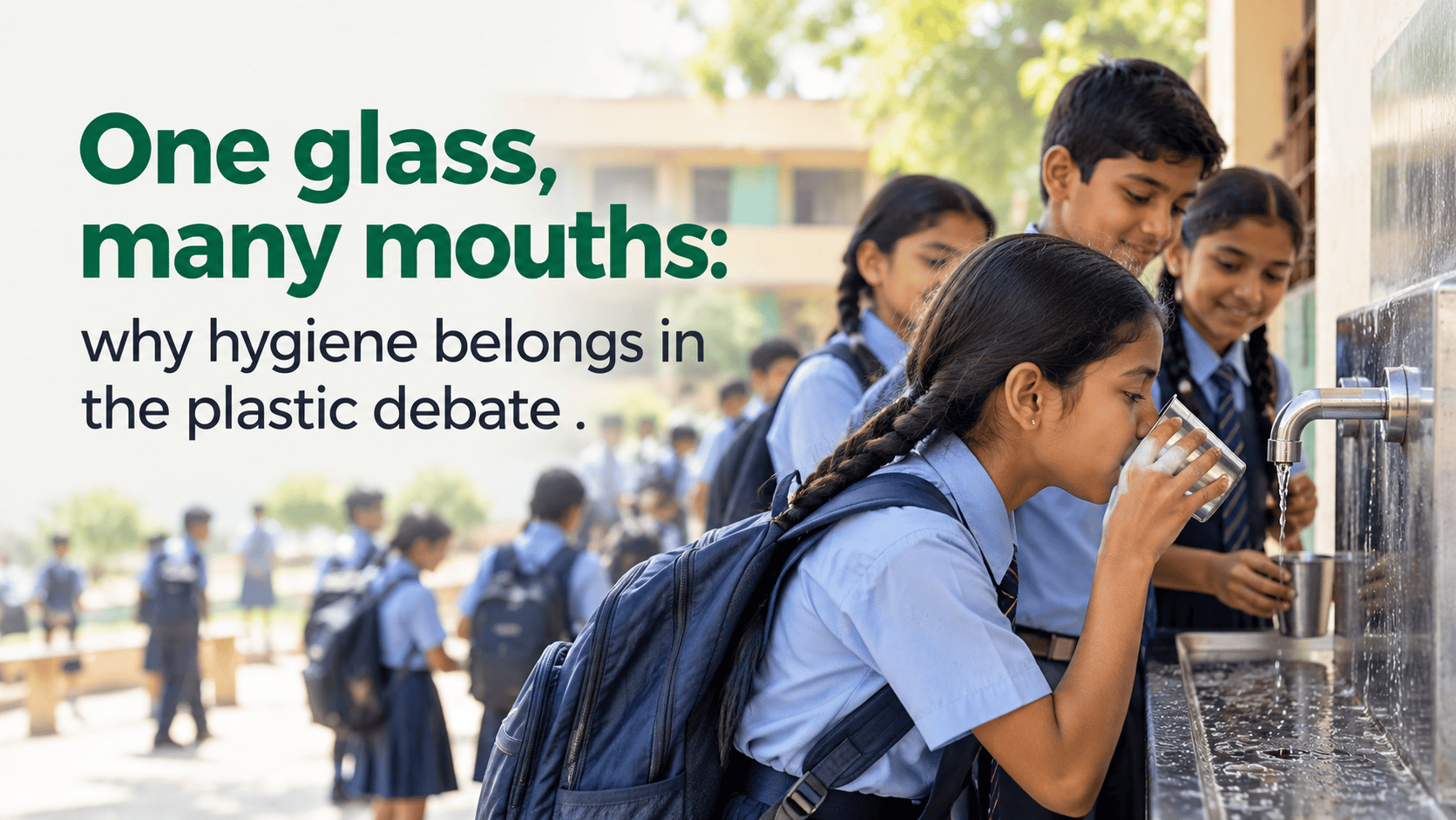
But the most common alternative to a plastic tumbler isn’t a gleaming reusable glass. In many schools, hospitals and community kitchens it’s a single steel tumbler at the water point, passed from person to person with a quick rinse, or none at all.
Why hygiene is a sustainability issue
“A significant proportion of diarrhoeal disease can be prevented through safe drinking-water and adequate sanitation and hygiene.”
WHO estimates that diarrhoeal disease kills around 443,832 children under five every year. A shared glass is one small link in a long chain of water, sanitation and hygiene, but it’s a link that sits right where children and patients drink.[2]
Don’t trade one problem for another
The goal isn’t just fewer plastic tumblers. It’s a clean glass for every person, without the plastic. That means washing has to happen where drinking happens, quickly, and without depending on someone remembering to do it.
Sources
- [1]OECD (2022), Global Plastics Outlook: Economic Drivers, Environmental Impacts and Policy Options. OECD Publishing, Paris. View source (opens in a new tab)
- [2]World Health Organization (2024), Diarrhoeal disease fact sheet, 7 March 2024. View source (opens in a new tab)
See GILAS working in your setting.
Book a 15-minute demo for your school, hospital, event or office.
Request Demo